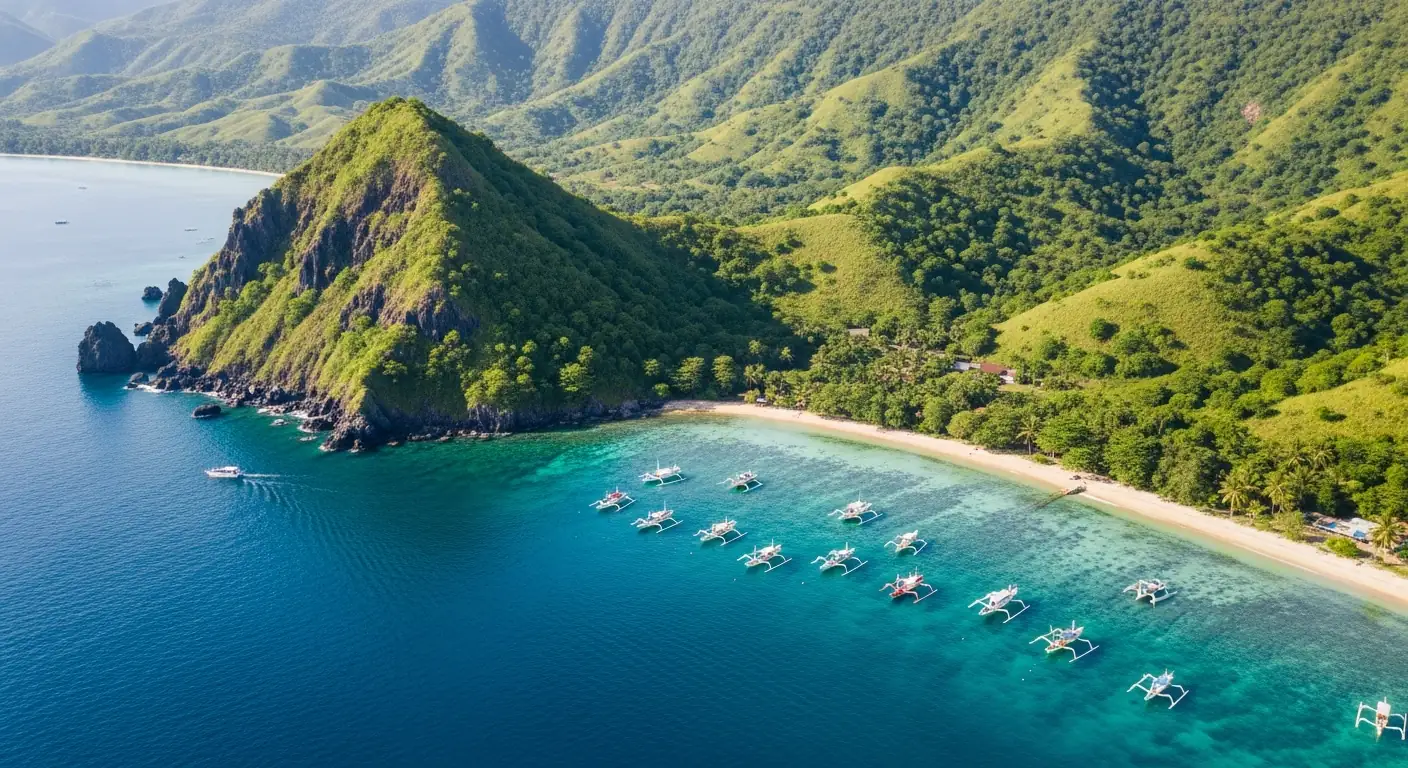
The morning light across Alor’s volcanic peaks casts long shadows over the Savu Sea, revealing the deep blue expanse that holds some of Indonesia’s most biodiverse waters. Below the surface, currents sculpt vibrant coral gardens and deep-water trenches, attracting a spectrum of marine life from pygmy seahorses to pelagic giants. Above, the island’s interior resonates with the rhythms of ancient traditions, where communities preserve their ancestral customs amidst a landscape of rugged beauty. This dual allure defines Alor, a destination for those who seek both the profound silence of the underwater world and the resonant echoes of living culture.
The Alor Archipelago: A Biodiversity Hotspot in East Nusa Tenggara
The Alor Archipelago, forming part of the eastern Lesser Sunda Islands of Indonesia, presents an intricate marine ecosystem. This region, administered by Alor Regency, supports a population estimated at 225,020 residents as of mid-2024. Alor Island itself, situated at approximately 8.250°S, 124.750°E, stands as the largest landmass within this chain. Its geographical position influences the strong currents that characterize many dive sites, bringing nutrient-rich waters that sustain an extraordinary variety of marine species. Scientists have documented over 1,000 species of fish and more than 300 coral species within these waters, a sign of the archipelago’s ecological significance. The convergence of the Pacific and Indian Oceans here creates a dynamic environment, fostering both robust coral growth and the presence of pelagic species. Divers frequently encounter schooling barracuda, trevally, and various shark species, alongside an astonishing array of macro life, including nudibranchs, frogfish, and rare crustaceans. The Alor Strait, a critical channel, acts as a migratory corridor for larger marine animals, making encounters with mola mola, whale sharks, and even pilot whales possible during specific seasons. This confluence of factors establishes Alor as a prime destination for both muck-diving enthusiasts and those seeking encounters with large pelagics.
Diving Alor Island: Sites and Sub-aquatic Landscapes
Alor Island’s dive sites offer a diverse range of underwater experiences, from vibrant reef walls to intricate muck environments. The island’s topography extends below the surface, creating dramatic drop-offs, sheltered bays, and volcanic formations. Pura Island, a smaller landmass northwest of Alor, hosts several renowned sites like “The Cathedral,” characterized by its large coral formations and abundant fish life, including schools of fusiliers and snapper. Closer to Kalabahi, sites such as “Clown Valley” showcase dense populations of anemonefish within a shallow, protected area. For muck diving, the black sand slopes near the port of Kalabahi provide a fertile hunting ground for rare critters like mimic octopuses, flamboyant cuttlefish, and various species of seahorse. Water temperatures typically range from 26°C to 30°C, though thermoclines can be present in deeper areas, particularly during the cooler months of July and August. Visibility generally exceeds 20 meters, often reaching 30 meters or more in the calmer periods between the peak current flows. The sheer diversity of sites means divers can explore deep walls, drift along current-swept pinnacles, or meticulously search for macro subjects, often within the same day.
Coral Reef Ecosystems of the Alor Archipelago
The Indonesian coral reef ecosystems surrounding Alor Island are among the healthiest in the world, exhibiting high coral cover and species richness. Hard corals, including massive porites, branching acropora, and intricate gorgonians, dominate many reef structures, providing critical habitat for countless fish and invertebrate species. Soft corals, particularly vibrant dendronephthya and sarcophyton species, add splashes of color to many dive profiles. The absence of large-scale industrial development and significant tourism infrastructure has largely protected these reefs from widespread degradation. Local communities, through traditional fishing practices and growing awareness, play a role in conservation efforts. However, challenges such as climate change-induced coral bleaching events and localized overfishing remain concerns, requiring ongoing monitoring and sustainable management strategies. The resilience of Alor’s reefs, evident in their recovery from past disturbances, underscores their ecological importance and the urgency of their continued protection.
Cultural Encounters: Traditions of Alor Island
Beyond its marine wonders, Alor Island offers profound cultural experiences rooted in ancient traditions. The indigenous communities of Alor maintain distinct customs, languages, and belief systems, many of which predate the arrival of major religions. The Abui, Kafoa, and Kui are among the numerous ethnic groups, each contributing to the island’s rich cultural mosaic. Traditional villages, such as Takpala, located about 30 kilometers east of Kalabahi, preserve architectural styles featuring conical, thatched-roof houses (Lopo) built on stilts. Here, visitors can witness traditional ceremonies, including the Lego-lego dance, a communal circle dance performed to rhythmic drumming and singing, often involving dozens of participants. The production of Ikat weaving, using natural dyes and intricate patterns, remains a vital craft, with different villages specializing in unique motifs. Alor’s history also includes the use of Moko drums, bronze ceremonial drums that once served as currency and symbols of status, some dating back hundreds of years. These cultural interactions offer a deep insight into the enduring heritage of the Alor people, providing a complementary dimension to the island’s natural attractions.
Accessing Alor: Travel and Logistics
Accessing Alor Island primarily involves domestic air travel to Mali Airport (Alor Island Airport), located about 18 km from Kalabahi town center. Mali Airport (IATA code ARD, ICAO code WATM) facilitates daily domestic flights connecting Alor Island with Kupang, the provincial capital of East Nusa Tenggara. Travelers from international destinations typically fly into Denpasar (Bali) or Jakarta, then connect to Kupang (El Tari International Airport, IATA code KOE), followed by the onward flight to Alor. The flight duration from Kupang to Alor is approximately 50 minutes. Upon arrival at Mali Airport, ground transportation, including local taxis and pre-arranged transfers, is available to Kalabahi or other accommodations. For those planning an extended trip through East Nusa Tenggara, ferry services also connect Alor with other islands, though these are less frequent and more susceptible to weather conditions. The primary tourist season for diving generally runs from April to November, avoiding the heavier rainy season, though diving is possible year-round with considerations for specific conditions. Planning travel in advance, especially during peak months, ensures smoother logistics for flights and accommodation on this remote island.
For further exploration of Alor Island’s unique offerings, consult these authoritative sources: Wikipedia: Alor Island, Wikidata: Alor Island, Wikipedia: Alor Archipelago, Wikipedia: Alor Regency.
Whether your interest lies in the vibrant ecosystems beneath the waves or the enduring traditions of its people, Alor presents a destination rich in discovery. Explore the depths of its waters and the heart of its culture with Alor Island Dive & Culture.
Geographic Context and Archipelagic Significance
Alor Island, the largest landmass within the Alor Archipelago, is strategically positioned at approximately 8.250°S, 124.750°E. This places it firmly within Indonesia’s East Nusa Tenggara province, an area renowned for its biodiversity and distinct cultural heritage. The archipelago itself forms a crucial eastern branch of the Lesser Sunda Islands, a chain of islands stretching across the Indonesian maritime domain. This geographic placement dictates much of its unique marine life and terrestrial characteristics, separating it from the more heavily trafficked routes to Bali or Lombok.
Understanding Alor’s location is paramount for trip planners. Its relative isolation, while a boon for conservation, necessitates careful consideration of travel logistics. The surrounding waters, influenced by deep ocean trenches and nutrient-rich upwellings, contribute to the island’s reputation as a world-class dive destination. This specific eastern Lesser Sunda location also connects Alor to a broader geological narrative, shaping its volcanic landscapes and the intricate coral reef systems that divers come to explore. It’s not just an island; it’s a vital link in a significant regional chain.
Population Dynamics and Cultural Diversity
Alor Regency, the administrative body for the entire Alor Archipelago, recorded an official mid-2024 population estimate of 225,020 residents. This figure provides a concrete scale for understanding the human presence across these islands. The majority of this population resides on Alor Island itself, particularly concentrated around the capital town of Kalabahi and various coastal and inland villages. This distribution influences local infrastructure and the availability of services for travelers.
The cultural landscape of Alor is remarkably diverse, a direct reflection of its historical isolation and varied ethnic groups. Over 15 distinct indigenous languages are spoken here, a linguistic richness rarely found in such a compact area. While Indonesian is the official language, local tongues remain vital for daily life in the villages. A significant part of Alor’s culture is shaped by its historical interactions; for instance, there is a notable Muslim population, particularly in Kalabahi, reflecting centuries of trade and influence from areas like Makassar and Surabaya. Traces of Dutch colonial influence are also occasionally observed, though less overtly than in other parts of Indonesia. Accounting for this cultural mosaic is essential for any visitor truly seeking to connect with the local community.
Air Travel and Arrival Logistics
Mali Airport, located approximately 18 km from Kalabahi town center on Alor Island, serves as the primary aerial gateway to the Alor Archipelago. Its IATA code is ARD, and the ICAO code is WATM. This facility is crucial for all international and domestic visitors, as it provides the only direct flight connection to the island. All routes currently connect Alor Island with Kupang, the provincial capital of East Nusa Tenggara.
Planning your arrival in advance is critical. Generally, flights to Mali Airport are operated by regional carriers from Kupang. There are no direct international flights to Alor. Therefore, travelers must first fly into a major Indonesian hub—such as Jakarta, Denpasar (Bali), or Surabaya—and then connect to Kupang. From Kupang, the final leg to Alor is relatively short. Confirming flight schedules well in advance is highly recommended, as they can be subject to change, especially during the low season. This two-step air route is standard procedure for accessing Alor’s remote beauty.
Kalabahi: The Urban Center
Kalabahi serves as the district capital and the largest town on Alor Island, effectively functioning as the administrative and commercial heart of the entire Alor Regency. Located on the northern coast, it is the primary hub for services, supplies, and government functions. Mali Airport is situated about 18 km away, making Kalabahi the natural first stop for most visitors upon arrival.
The town itself, while modest by Western standards, offers basic amenities including guesthouses, small restaurants, and markets. It’s a place where local culture is evident, with a blend of traditional life and modern conveniences. The majority of the island’s Muslim population resides in and around Kalabahi, contributing to its diverse cultural fabric. Travelers often pass through Kalabahi to organize onward transport to dive resorts or remote villages, making it an essential practical planning detail for any trip to the region.
Island: Transportation and Infrastructure
Navigating Alor Island generally involves a combination of land and sea transport. Given the island’s topography and the distribution of villages, roads connect the main population centers, but access to more remote coastal areas often requires boat travel. The road network is primarily centered around the northern and southeastern districts, connecting Kalabahi to key points of interest. However, conditions can vary significantly, especially after heavy rains.
For independent travel, motorcycle rentals are available in Kalabahi. Alternatively, local taxis or chartered vehicles can be arranged for longer distances. Public transport, primarily bemo (minibuses), operates on fixed routes but can be slow and infrequent. For divers, resorts often provide transfers directly from Mali Airport or Kalabahi. Planning your onward journey from Kalabahi in advance is a practical necessity, especially if you’re heading to dive sites or villages in the more isolated parts of the island, where transport options are limited and communication signals can be sporadic.
Cultural Immersion: Villages and Traditional Life
Alor Island offers profound opportunities for cultural immersion, particularly in its numerous traditional villages. These communities, scattered across the island’s interior and coastline, provide a window into the rich and diverse Alorese culture. Visiting these villages allows travelers to directly engage with local traditions, often centered around animistic beliefs, intricate weaving, and distinctive architectural styles. This direct interaction is a core component of the Alor cultural experience.
Many villages maintain unique customs and languages, a the island’s prolonged isolation. For instance, some communities in the northern and southeastern parts of the island are known for their traditional Moko drums or ‘Lego-Lego’ dances. Engaging with these communities requires respect and sensitivity; it’s advisable to arrange visits through reputable local guides or dive operators who have established relationships. This approach ensures a meaningful exchange while respecting local customs. The opportunity to account for such rich cultural experiences is what truly elevates a trip beyond just diving.